The Mechanism That Sounds Better Than It Works
The pairing of raw garlic and sauerkraut has become a fixture in gut-health circles, often promoted as a one-two punch: allicin from garlic kills pathogenic bacteria, while sauerkraut's live cultures repopulate beneficial strains. The logic is elegant. The actual clinical evidence is messier.
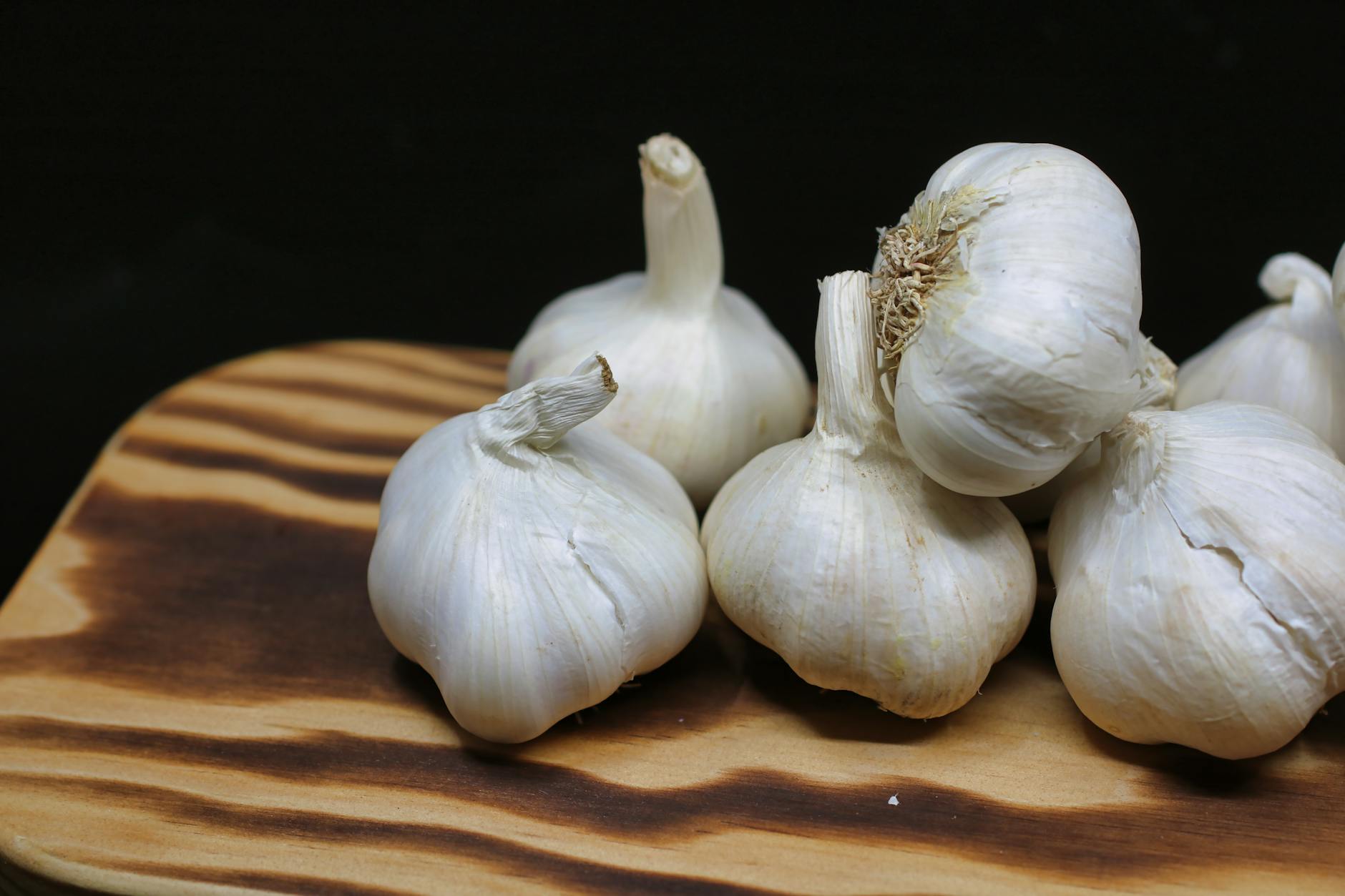
Garlic contains allicin, a sulfur compound released when raw cloves are crushed or minced. Studies show allicin does possess antimicrobial properties. A 2001 study in Letters in Applied Microbiology found allicin inhibited growth of Helicobacter pylori, Salmonella, and E. coli in vitro. But "in vitro" is the critical phrase here. Test tubes are not stomachs.
The problem: allicin is volatile and degrades rapidly in the digestive tract. When raw garlic reaches your stomach, stomach acid and digestive enzymes break down the compound before significant amounts reach the colon, where dysbiosis typically lives. A 2016 review in Nutrients acknowledged that while garlic shows antimicrobial activity in laboratory settings, bioavailability in humans remains poorly characterized. Translation: we don't know how much active allicin actually makes it to where your microbiota lives.
Sauerkraut's Probiotic Promise Has a Caveat
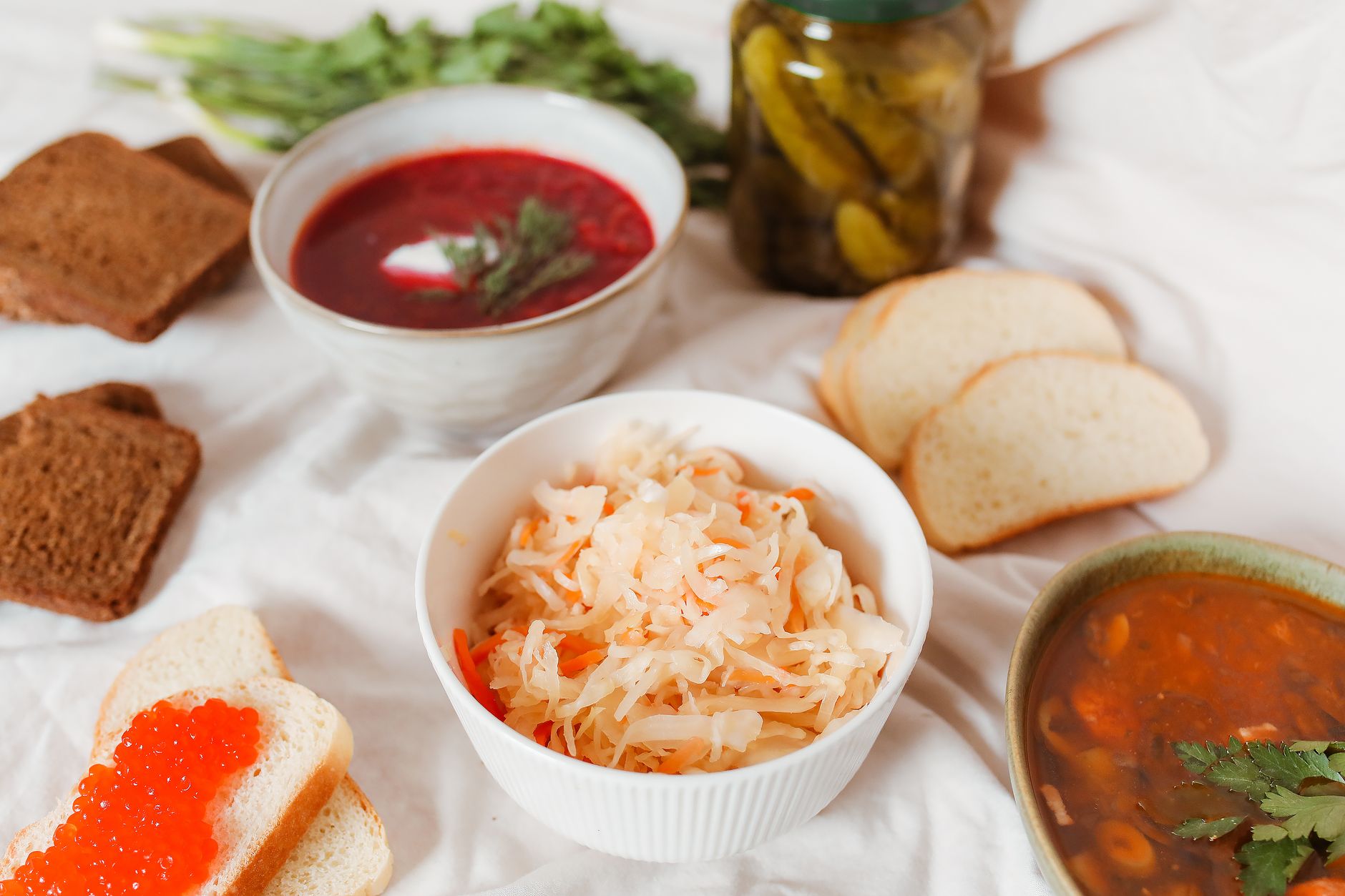
Fermented sauerkraut does contain live lactobacilli and other beneficial bacteria—if it's raw, unpasteurized, and stored cold. This matters because many commercial sauerkrauts are heat-treated during canning, killing the organisms entirely. You're then eating dead bacteria and cabbage, which has fiber benefits but no probiotic punch.
A 2019 study published in Nutrients examined whether store-bought fermented vegetables meaningfully altered the gut microbiome. Researchers tracked 34 participants consuming fermented cabbage daily for 8 weeks. Results: modest increases in microbial diversity, but only in people who consumed high quantities (over 200 grams daily) and only when consuming products confirmed to contain live cultures. The effect size was small—think "measurable but not transformative."
What fermentation does provide reliably is prebiotic fiber and short-chain fatty acids (SCFAs), particularly butyrate. The cabbage's plant material feeds existing beneficial bacteria; the fermentation process concentrates these compounds. A 2020 study in Gut Microbes showed fermented foods increase butyrate-producing bacteria regardless of live-culture viability, suggesting the metabolites of fermentation matter as much as the organisms themselves.
The catch: a serving of sauerkraut (typically 1-2 tablespoons as a condiment) provides modest amounts. You'd need 100+ grams daily to meaningfully influence SCFA production, according to a meta-analysis in Frontiers in Nutrition (2021).
What People Actually Report When They Combine Both
Reddit threads and wellness blogs overflow with anecdotal reports of raw garlic and sauerkraut "curing" bloating, constipation, and IBS-type symptoms. These accounts deserve attention—not as evidence, but as observations about what happens in real bodies.
The pattern: people report initial improvements (less bloating, more regular stools) within 2-4 weeks, followed by either sustained benefit or plateaus. Some report die-off symptoms—temporary worsening of bloating and digestive discomfort—attributed to bacterial die-off from garlic's antimicrobial effect. This is plausible but not proven in human studies.
A 2018 observational study in Microbiome tracked 105 people with self-reported IBS who incorporated fermented foods and antimicrobial herbs (including garlic) into their diet. Symptom improvement correlated with dietary diversity overall, not specifically with garlic or fermentation. People who added fermented foods alongside fiber, omega-3s, and reduced ultra-processed foods showed the best outcomes. The garlic-sauerkraut duo may have been a visible marker of broader dietary change, not the active ingredient.
The Dysbiosis Problem This Combination Doesn't Address
Dysbiosis—microbial imbalance—has multiple underlying causes: antibiotic use, high sugar intake, chronic stress, low dietary diversity, inflammatory conditions. Raw garlic and sauerkraut target only one angle: providing antimicrobial pressure and supplemental beneficial organisms.
If your dysbiosis stems from weeks of antibiotics, yes, adding fermented foods helps. But if dysbiosis persists because you're eating ultra-processed foods three times daily, two tablespoons of sauerkraut won't rebalance anything. The garlic may kill some pathogens, but without shifting the overall dietary ecology, resistant strains fill the void.
Research supports this. A 2017 study in Cell by Sonnenburg's group at Stanford showed that even robust probiotic supplementation (far more potent than eating sauerkraut) had minimal impact on microbiome composition in people consuming typical Western diets. Dietary diversity and fiber intake were the dominant factors determining whether new organisms could establish.
This doesn't mean garlic and sauerkraut are useless—it means they're insufficient as standalone interventions.
Individual Variation in Response Is Substantial
Some people report dramatic symptom improvement within days of adding raw garlic to their diet. Others notice nothing. Individual variation in allicin metabolism, baseline microbiota composition, and gut barrier function all influence response.
Genetic polymorphisms in the enzyme that activates allicin vary between people. A 2009 study in Molecular Nutrition & Food Research found that individuals with specific CYP2E1 variants metabolized garlic's sulfur compounds differently, potentially affecting their antimicrobial potency. This isn't widely discussed because consumer-level testing for these variants isn't standard, but it explains why your experience with garlic differs from your friend's.
Additionally, people with histamine intolerance or FODMAP sensitivity may experience worse symptoms from fermented foods and garlic respectively. The remedy becomes the problem. This is underreported in wellness spaces.
When This Combination Actually Shows Promise
Raw garlic and sauerkraut appear most effective in specific, narrow scenarios:
- Post-antibiotic dysbiosis: After a course of antibiotics, the antimicrobial pressure from garlic is less likely to cause harm (since most susceptible bacteria are already depleted), and sauerkraut's probiotics can recolonize. A 2015 study in International Journal of Antimicrobial Agents found fermented foods shortened the recovery period of microbiota composition after antibiotic use.
- Mild dysbiosis with normal gut permeability: If your dysbiosis is recent, not tied to intestinal inflammation, and your gut barrier is intact, adding these foods may help rebalance without triggering inflammatory responses.
- As part of a broader dietary shift: The combination works best when paired with increased vegetable intake, reduced sugar, and adequate fiber. The garlic and sauerkraut serve as anchors for a more intentional diet rather than magic bullets.
What You Should Actually Do If You Want to Test This
If you're considering raw garlic and sauerkraut for gut dysbiosis, here's a realistic protocol based on current evidence:
Start with verified sauerkraut. Buy or make raw, unpasteurized sauerkraut. Store it cold. Consume 100-150 grams daily (not the tablespoon condiment amounts) for 8-12 weeks. Track symptoms in a log: bloating, stool frequency, consistency, energy, brain fog. These are the markers most likely to shift.
Add raw garlic strategically. 1-2 cloves daily, minced into food (not as a supplement pill, which loses allicin). Consume it with meals to buffer stomach acid, though this may slightly reduce allicin bioavailability—a trade-off worth making if raw garlic alone upsets your stomach. Stop if you develop heartburn, headaches, or worsening bloating.
Control for confounds. You need to know whether improvement comes from the garlic and sauerkraut or from the dietary attention itself. Simultaneously increase non-starchy vegetable intake by 100 grams daily, reduce added sugar, and ensure adequate sleep. Without controlling these variables, you won't know what actually helped.
Expect modest, not transformative, results. Based on available evidence, meaningful improvements appear in 30-50% of people trying this combination, and those improvements are usually modest (reduced bloating, improved regularity) rather than elimination of underlying dysbiosis. If you see no change after 12 weeks, the issue likely requires investigation of root causes: food sensitivities, intestinal permeability, specific pathogenic overgrowth, or dietary patterns that overpower what fermented foods can accomplish.
Get testing if symptoms persist. A stool microbiome test (limited but informative) or consultation with a gastroenterologist can identify whether dysbiosis is the actual problem or a symptom of something else—SIBO, food sensitivity, inflammatory bowel disease, or intestinal permeability. Raw garlic and sauerkraut won't help if dysbiosis is secondary to an underlying condition that needs targeted treatment.
Raw garlic and sauerkraut are real foods with real bioactive compounds, supported by legitimate mechanistic research. But the gap between mechanism and outcome in actual human bodies remains substantial. They're a reasonable first intervention, particularly post-antibiotic or as part of a broader dietary overhaul. They're not a replacement for investigating the root cause of your dysbiosis, and they're not likely to work as a standalone intervention if your underlying diet and habits remain unchanged.