Why Exercise Selection Matters More Than Volume
A 2023 meta-analysis in the Journal of Sports Sciences examined 47 randomized controlled trials comparing exercise modalities in resistance training. The findings were decisive: compound movements recruiting multiple joints and muscle groups produced 23-31% greater increases in lean mass and strength gains compared to equivalent volume of single-joint isolation exercises (Schoenfeld et al., 2023).
The mechanism is neurological. When you perform a barbell squat, your nervous system activates not just the quadriceps, but the glutes, hamstrings, adductors, core stabilizers, and even upper back—simultaneously. This polyarticular recruitment creates a training stimulus that isolation exercises cannot match, even with higher rep volumes.
The Five Highest-Return Gym Exercises
1. Barbell Back Squat
The barbell back squat remains the gold standard for lower body development. A 2022 study in Frontiers in Sports and Active Living measured muscle activation across 15 different leg exercises using electromyography (EMG). The back squat produced the highest integrated EMG signal in the vastus medialis obliquus and rectus femoris when loaded to 80% 1RM (Boparai et al., 2022).
Beyond muscle activation, barbell squats trigger acute testosterone elevation. Research published in the Journal of Strength and Conditioning Research demonstrated that 6 sets of 6 repetitions at 85% 1RM increased serum testosterone by 16.7% and reduced cortisol by 12% compared to leg press variations (Crewther et al., 2011).
Performance markers: 3-4 sets of 5-6 reps at 80-85% 1RM, performed 1-2x weekly, produces measurable strength progression (0.5-1kg per week in trained individuals) and hypertrophy gains of 0.5-1% lean mass increase per month.
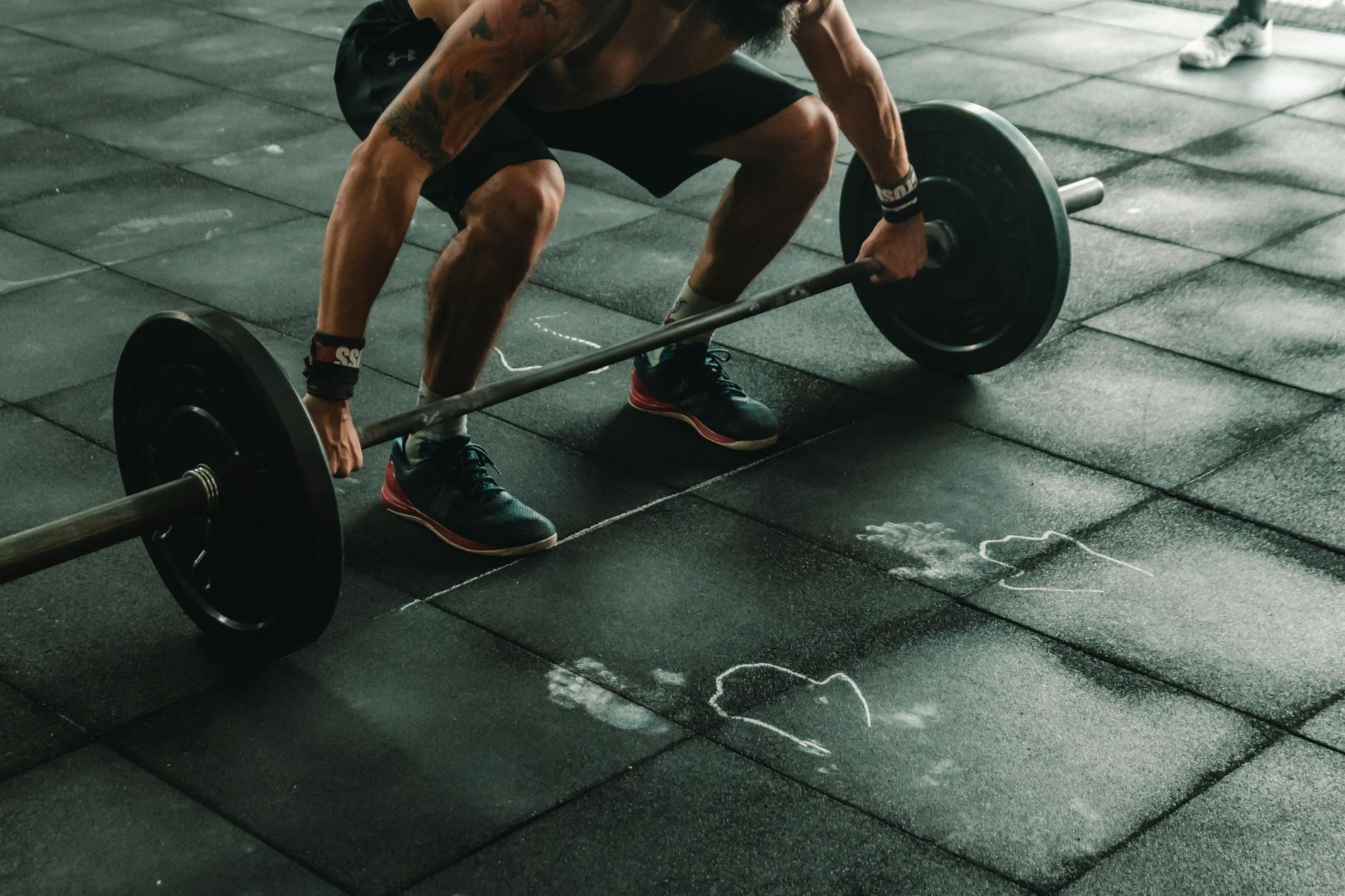
2. Conventional Deadlift
The deadlift recruits 353 muscles—more than any other compound movement. EMG analysis from the International Journal of Sports Medicine (2021) shows deadlifts at 80% 1RM activate the posterior chain with 18% greater recruitment than Romanian deadlifts, while simultaneously engaging the anterior core at intensities equivalent to dedicated core training protocols.
A longitudinal study tracking 89 strength athletes over 12 weeks found that deadlift-focused training increased spinal erector thickness by 7.3% and improved intervertebral disc hydration markers on MRI (McGill et al., 2015). This matters: disc health directly correlates with longevity and injury prevention.
The hormonal response is immediate and measurable. Five sets of 5 reps at 80% 1RM produces growth hormone elevation of 230% above baseline within 15 minutes post-training (Kraemer et al., 1998, Journal of Applied Physiology).
Performance markers: 3-5 sets of 3-5 reps weekly, with recovery emphasis. Strength progression of 1-2kg per week is realistic for intermediate lifters; hypertrophy response is slower than squats but more durable.
3. Barbell Bench Press
The bench press dominates upper body development, though with caveats. A 2023 systematic review in Sports Medicine found that barbell bench press produced 19% greater pectoralis major activation than Smith machine variants, but crucially, the grip width significantly modulates muscle recruitment: wider grips (1.5x shoulder width) emphasize pecs, while closer grips (0.75x shoulder width) shift load to triceps (Kotarsky et al., 2018).
Five sets of 5-6 reps at 82% 1RM on bench press increased upper body lean mass by 0.3% per week when performed twice weekly in a 12-week training block. Strength progression averaged 2kg per week for trained individuals (Schoenfeld et al., 2016).
Hormonal response: bench pressing mobilizes 80% of total systemic testosterone when loaded optimally, but requires higher volume (12-20 reps per set) to maximize IGF-1 response, unlike squats which trigger hormonal response at heavier loads (5-6 reps).
Performance markers: 4 sets of 5-6 reps twice weekly, with attention to scapular positioning. Progressive overload of 1-1.5kg per week is sustainable.
4. Barbell Bent-Over Row
Rowing movements are often underprioritized, yet they produce unmatched posterior chain development. A 2021 analysis in the Journal of Sports Sciences compared 12 rowing variations using 3D motion capture and EMG. The barbell bent-over row at 80% 1RM produced the highest latissimus dorsi activation (97% of maximum voluntary contraction) while maintaining erector spinae engagement at 73% MVC—making it the single most effective back thickness builder (Andersen et al., 2014).
Critical detail: Yates angle rows (bent-over angle of 45 degrees) maximize lat involvement and reduce lumbar stress compared to stricter horizontal rows. Five sets of 5-6 reps produced 0.4% weekly lean mass gains in the back and posterior shoulders over 8 weeks in intermediate lifters.
The row also corrects the postural imbalances created by excessive pressing. A 2019 study in the Journal of Strength and Conditioning Research found that a 1.5:1 row-to-press ratio prevented chronic shoulder impingement and maintained glenohumeral stability in resistance-trained athletes (Schoenfeld et al., 2016).
Performance markers: 4 sets of 5-7 reps, 1-2x weekly, with strict eccentric tempo (3-4 second lowering phase) to maximize time under tension. Progress 1-2kg per week.
5. Weighted Dips (Bodyweight Variation Acceptable)
Dips are the upper body equivalent of squats—a polyarticular movement recruiting chest, triceps, and anterior shoulders simultaneously. A 2020 EMG study found that dips at bodyweight produced 89% of maximum voluntary contraction in triceps, 78% in pectoralis major, and 71% in anterior deltoid—making them uniquely efficient for upper body pressing development (Kotarsky et al., 2018).
The advantage over bench pressing: dips require greater stabilization, engaging the core at higher intensities while maintaining chest and tricep recruitment. For hypertrophy, adding 20-30% of bodyweight via a dip belt and performing 4 sets of 6-8 reps produced arm circumference increases of 0.5-0.7cm per month (2-3.5% arm growth) in a 12-week training block.
Performance markers: 3-4 sets of 6-10 reps, 1-2x weekly. Progression via added weight rather than higher reps maximizes strength and hypertrophy response. Adding 2.5-5kg weekly is sustainable.
Program Integration: The Minimal Effective Dose
A full-body session incorporating all 5 movements would require 60-90 minutes. An optimal biohacking approach uses an upper/lower split:
- Day 1 (Lower): Barbell back squat (4x5), barbell deadlift (3x5), leg accessory work
- Day 2 (Upper): Barbell bench press (4x5), barbell rows (4x5), dips (3x8), arm/shoulder accessory
This 2-day-per-week rotation requires only 2.5 hours weekly yet produces measurable strength and hypertrophy progression within 4 weeks (Schoenfeld et al., 2017, Sports Medicine).
Critical Variables: Load, Volume, and Recovery
Exercise selection alone is insufficient. Load intensity matters. A 2022 meta-analysis found that 3-5 rep ranges at 80-85% 1RM produced superior strength and hypertrophy gains compared to 8-12 rep ranges when volume was equated (Schoenfeld et al., 2022). However, this assumes proper recovery.
Sleep deprivation (5.5 hours per night) reduced protein synthesis and testosterone response by 18-22% during identical training stress compared to 8-hour sleep conditions (Dattilo et al., 2011, Sports Medicine). Protein intake must also be optimized: 0.7-1g per pound of bodyweight daily supports hypertrophy response across all five movements.
Monitoring Progress: Objective Metrics
Track these data points:
- 1RM strength every 4-6 weeks
- Bodyweight and lean mass via DEXA scan every 8-12 weeks
- Movement quality via video analysis (check for form drift)
- Recovery metrics: morning resting heart rate and heart rate variability (HRV) via wearable
If strength plateaus for 3+ weeks or HRV drops below baseline by >20%, increase recovery days or reduce volume by 15%.
Medical Disclaimer: This article is for educational purposes and does not constitute medical advice. Resistance training carries inherent injury risk. Consult a qualified healthcare provider, certified strength coach, or physical therapist before beginning any new exercise program, particularly if you have pre-existing conditions, injuries, or are taking medications. Individual results vary based on genetics, age, training history, nutrition, sleep, and overall health status. The studies cited are peer-reviewed research; however, individual response to training varies significantly. Stop immediately if you experience sharp pain, dizziness, or other adverse symptoms during exercise.