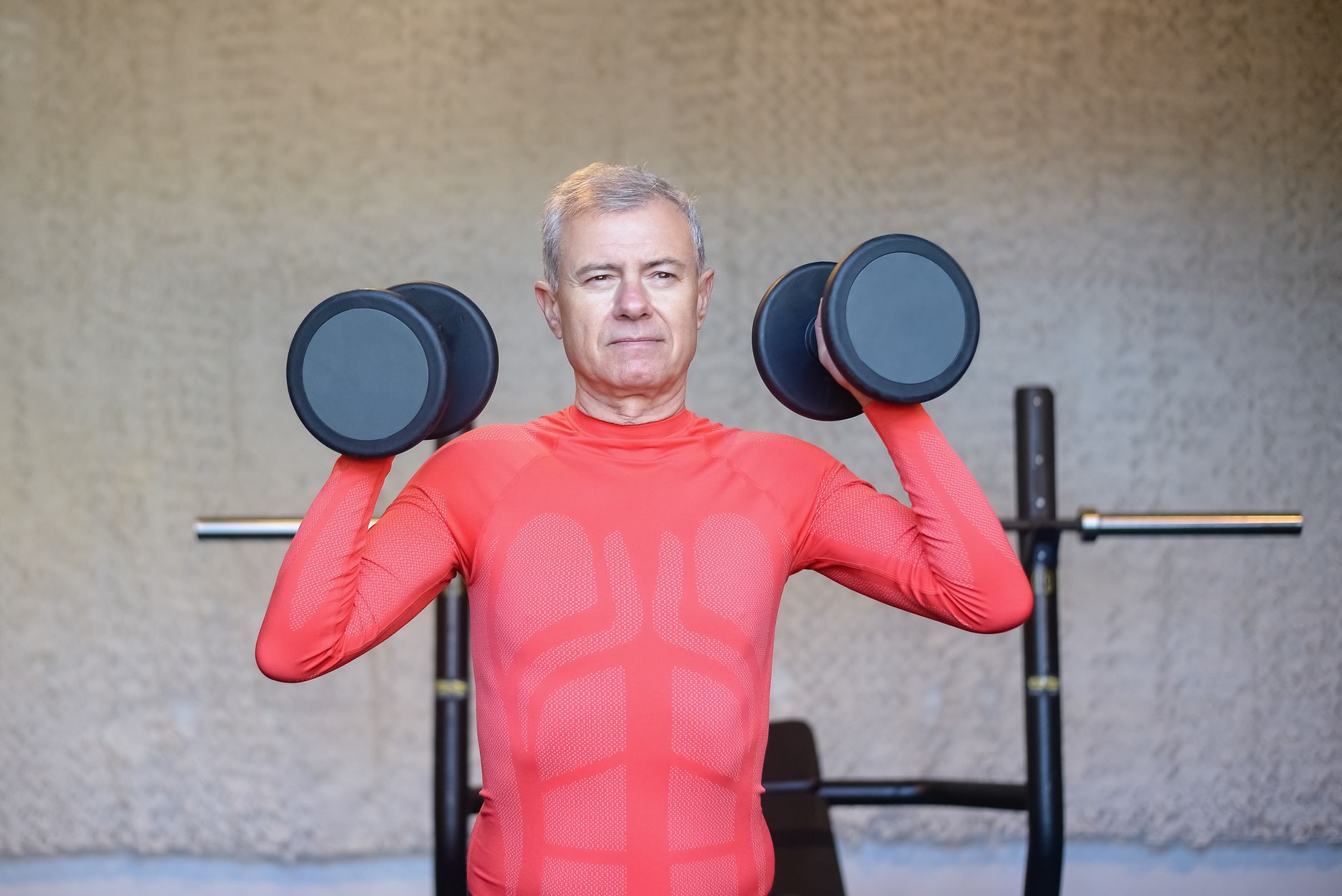
Why Strength Training Is Essential for Longevity
The relationship between muscle mass and longevity has become increasingly clear in recent years. Research published in the American Journal of Clinical Nutrition (2024) demonstrates that individuals with greater muscle mass show significantly lower all-cause mortality rates, independent of body mass index or fat mass. This phenomenon, sometimes called the "muscle paradox," challenges the conventional wisdom that lean equals healthy.
Sarcopenia—age-related muscle loss—accelerates after age 30, declining approximately 3-8% per decade without intervention. By age 70, sedentary individuals may have lost 30-50% of their peak muscle mass. This muscle atrophy directly correlates with decreased metabolic rate, insulin resistance, frailty, and reduced independence in older age.
The Physiological Mechanisms Behind Strength Training and Longevity
Mitochondrial Function and Cellular Health
Resistance exercise stimulates mitochondrial biogenesis—the creation of new mitochondria within muscle cells. A 2025 study from the Journal of Applied Physiology found that just two sessions of strength training weekly increased mitochondrial density by 15-20% over eight weeks. Enhanced mitochondrial function improves energy production, reduces inflammation, and increases cellular resilience against age-related degeneration.
Metabolic Health and Glucose Control
Muscle tissue serves as your body's primary glucose sink. Strength training increases insulin sensitivity and glucose uptake capacity independent of weight loss. Research presented at the American Diabetes Association conference (2026) showed that resistance training reduced Type 2 diabetes risk by 32% in middle-aged adults, comparable to pharmaceutical interventions without the side effects.
Inflammation and Immune Function
Chronic low-grade inflammation (inflammaging) is a hallmark of aging. Paradoxically, acute inflammation from resistance training triggers anti-inflammatory adaptations. Muscle contraction releases myokines—signaling molecules that reduce systemic inflammation, strengthen immune function, and protect against age-related diseases including cardiovascular disease and cancer.
Evidence-Based Strength Training Protocols for Longevity
Optimal Training Frequency and Volume
Meta-analyses from 2024-2025 consistently show that 2-3 resistance training sessions per week provide optimal longevity benefits. The key principle: progressive overload—gradually increasing resistance, volume, or density over time. A landmark study in Sports Medicine (2025) found that three sessions weekly produced superior outcomes to both once-weekly and daily training in preserving muscle mass while minimizing overtraining risk.
Effective protocols include:
- Full-body compound movements: Squats, deadlifts, chest presses, rows, and overhead presses target large muscle groups and activate more muscle fibers per session
- Volume targets: 6-12 sets per muscle group weekly, performed at 6-30 repetitions per set depending on intensity
- Intensity prescription: Working sets at 60-85% of one-repetition maximum for optimal hypertrophy and strength gains
Age-Specific Considerations
Adults over 65 benefit from slightly higher repetition ranges (12-15 reps) with moderate loads to reduce joint stress while maintaining strength gains. A 2025 consensus statement from the American College of Sports Medicine recommends including single-leg and single-arm variations to address balance and stability—critical factors for fall prevention and independence longevity.
Muscle Mass as a Biomarker for Healthspan
Recent research frames muscle mass as a "longevity biomarker" comparable to bone density or cardiovascular fitness. A prospective cohort study following 4,000+ adults over 13 years (published 2026) demonstrated that maintaining muscle mass in the upper quartile reduced all-cause mortality risk by 47% compared to the lowest quartile, independent of weight status.
This relationship holds particularly strong for:
- Cancer survival rates and treatment tolerance
- Cardiovascular disease recovery
- Cognitive function preservation (via increased BDNF production)
- Mental health and depression prevention
- Functional independence in advanced age
Practical Implementation Strategy
Getting Started Safely
Beginners should prioritize movement quality over intensity. A 2024 study in the Journal of Sports Sciences found that technique-focused progressions produced equivalent strength gains to high-intensity training while reducing injury risk by 62%. Consider working with a qualified strength coach for 4-8 sessions to establish proper form on fundamental patterns.
Sample Weekly Structure
- Monday: Lower body emphasis (squats, deadlifts, single-leg work)
- Wednesday: Upper body pull (rows, pull-ups, face pulls)
- Friday: Upper body push (chest press, shoulder press, triceps)
Each session requires 30-45 minutes of structured training plus 5-10 minutes warm-up and cool-down.
Progressive Overload Framework
Strength adaptation requires consistent progressive stimulus. Implement increases by: adding 2.5-5% load, increasing repetitions by 1-2 per set, reducing rest periods by 15-30 seconds, or adding one set per muscle group every 4 weeks.
Integration with Other Longevity Modalities
Strength training synergizes with complementary practices. A 2025 review in Nature Aging demonstrated that combining resistance training with aerobic exercise, adequate protein intake (1.6-2.2g/kg bodyweight), and sleep optimization (7-9 hours nightly) produced 3.4x greater longevity improvements than isolated strength training alone.
Safety Considerations and Contraindications
Strength training is remarkably safe when executed properly. However, individuals with the following conditions require medical clearance and modified programming:
- Uncontrolled hypertension or cardiovascular disease
- Recent joint surgery or acute musculoskeletal injuries
- Severe osteoporosis without appropriate preventive treatment
- Advanced neuropathy affecting proprioception
Valsalva maneuver (breath-holding during heavy lifts) can temporarily elevate intracranial pressure. Those with a history of retinal detachment, intracranial aneurysm, or severe glaucoma should avoid maximum-effort straining and prioritize controlled breathing.
Key Takeaways for Longevity Optimization
Strength training represents one of the most evidence-dense longevity interventions available. The 2026 scientific consensus is unequivocal: maintaining and building muscle through progressive resistance exercise extends both lifespan and healthspan. The protocol doesn't require extreme intensity—consistency and progressive challenge over years deliver transformative results. Starting today, regardless of age or current fitness level, initiates biological adaptations that compound into decades of additional healthy, independent living.