
The Purity Problem: What 77% Actually Means for Your Dose
When a pharmaceutical compound is advertised at a specific concentration but contains only 77% of the claimed active ingredient, the mathematical implications cascade through every downstream assumption about safety and efficacy. A recent independent laboratory analysis testing grey market semaglutide samples revealed this exact discrepancy—a finding that demands serious attention from anyone considering GLP-1 receptor agonists for weight management or metabolic optimization.
Semaglutide (marketed as Ozempic, Wegovy, or Rybelsus) functions as a GLP-1 receptor agonist, triggering insulin secretion, reducing glucagon release, and slowing gastric emptying. Clinical trials establishing its efficacy used pharmaceutical-grade compounds with verified purity exceeding 99%. When grey market suppliers claim to sell semaglutide at standard concentrations but deliver 77% purity, they are functionally delivering a 23% dose reduction without the user's knowledge.
Dose-Response Nonlinearity and the Metabolic Consequences
GLP-1 pharmacology is not linear. The dose-response curve for semaglutide exhibits a threshold effect, meaning that a 23% reduction in active compound may not produce a proportional 23% reduction in clinical outcomes—it could produce substantially greater or more unpredictable effects depending on individual receptor sensitivity, genetic variants in GLP1R expression, and concurrent metabolic state.
Research published in Nature Metabolism (2022) by Drucker et al. demonstrated that GLP-1 receptor saturation exhibits sigmoidal kinetics. Doses below the EC50 threshold show steep dose-response curves, meaning small absolute reductions in concentration can produce disproportionately large changes in clinical effect. A user believing they are self-administering 0.5 mg but receiving only 0.385 mg (77% of stated dose) may fall into a subtherapeutic window where appetite suppression is minimal but gastrointestinal side effects persist.
Contaminant Risk Profile in Grey Market Compounds
Purity analysis identifies not only the concentration of the desired compound but also the presence of process impurities, degradation products, and potential contaminants. The 77% figure suggests that 23% of the sample mass comprises unidentified compounds. In pharmaceutical manufacturing, this would trigger immediate investigation and batch rejection.
Common contaminants in unregulated peptide synthesis include:
- N-terminal truncation products: Incomplete peptide chains that may activate GLP-1 receptors unpredictably or trigger immune responses
- Oxidized forms: Semaglutide contains a cysteine residue vulnerable to oxidation, creating altered derivatives with unknown pharmacology
- Residual solvents: Dimethylformamide (DMF), acetonitrile, or other organic solvents retained from synthesis
- Metal contaminants: Lead, cadmium, or other heavy metals from uncontrolled manufacturing environments
- Endotoxins: Bacterial lipopolysaccharides triggering immune activation and inflammatory responses
A 2021 analysis in JAMA Internal Medicine examining compounded GLP-1 products (which share similar manufacturing pathways to grey market supplies) found that 34% of tested samples failed USP (United States Pharmacopeia) purity standards, and 12% contained detectable bacterial endotoxins.
Dosing Cascades and Metabolic System Dysregulation
Users receiving subpotent semaglutide often respond by increasing their self-administered dose, believing the compound is ineffective. This creates a secondary risk: if the actual purity is indeed 77%, but users double their dose to compensate, they may inadvertently reach toxic concentrations of the active compound plus a 2x exposure to contaminants.
Semaglutide's pharmacological effects include acute gastric stasis, altered incretin signaling, and modulation of hypothalamic appetite centers. Unpredictable dosing from impure compounds can produce:
- Severe nausea and vomiting unresponsive to antiemetics
- Acute pancreatitis risk (semaglutide carries a FDA black-box warning for pancreatitis in animal models)
- Gallstone formation from accelerated bile stasis
- Thyroid C-cell hyperplasia concerns (observed in rodent studies)
- Gastroparesis from prolonged gastric stasis
Research in Diabetologia (2020) demonstrated that GLP-1 agonist doses above the EC90 threshold do not improve glycemic control but significantly increase adverse event rates, suggesting a narrow therapeutic window where efficacy plateaus while toxicity risk climbs.
Longevity Claims vs. Purity Reality
The biohacking and longevity community has increasingly embraced semaglutide as a weight-loss and aging-intervention tool, based on observational associations between caloric restriction, weight loss, and lifespan extension in rodent models. However, this logic assumes:
- The compound is actually semaglutide at the stated dose
- The weight loss achieved is from the intended pharmacological mechanism
- The metabolic signaling cascades are identical to pharmaceutical-grade studies
The 77% purity finding invalidates assumption #1 entirely. If users are receiving only 77% of the claimed dose, their weight loss may result from placebo effect, behavioral changes from the expectation of taking semaglutide, or compensatory dietary restriction—not from the documented GLP-1 mechanism.
Long-term safety data for semaglutide spans approximately 8 years in clinical trials (Novo Nordisk LEADER trial cohort). Contaminant exposure from impure compounds introduces unknown variables. A 2023 investigation in Pharmaceutical Research highlighted that even minor contaminants in peptide therapeutics can accumulate in tissues (particularly kidneys and liver) over months to years, producing latent toxicity.
Testing Standards and Verification Gaps
Pharmaceutical-grade semaglutide is manufactured under GMP (Good Manufacturing Practice) guidelines with:
- HPLC (High-Performance Liquid Chromatography) purity verification >99%
- Mass spectrometry confirmation of molecular weight
- Endotoxin testing (LAL assay) at <0.175 USP Endotoxin Units per dose
- Sterility testing for bacterial and fungal contamination
- Water content analysis (Karl Fischer titration)
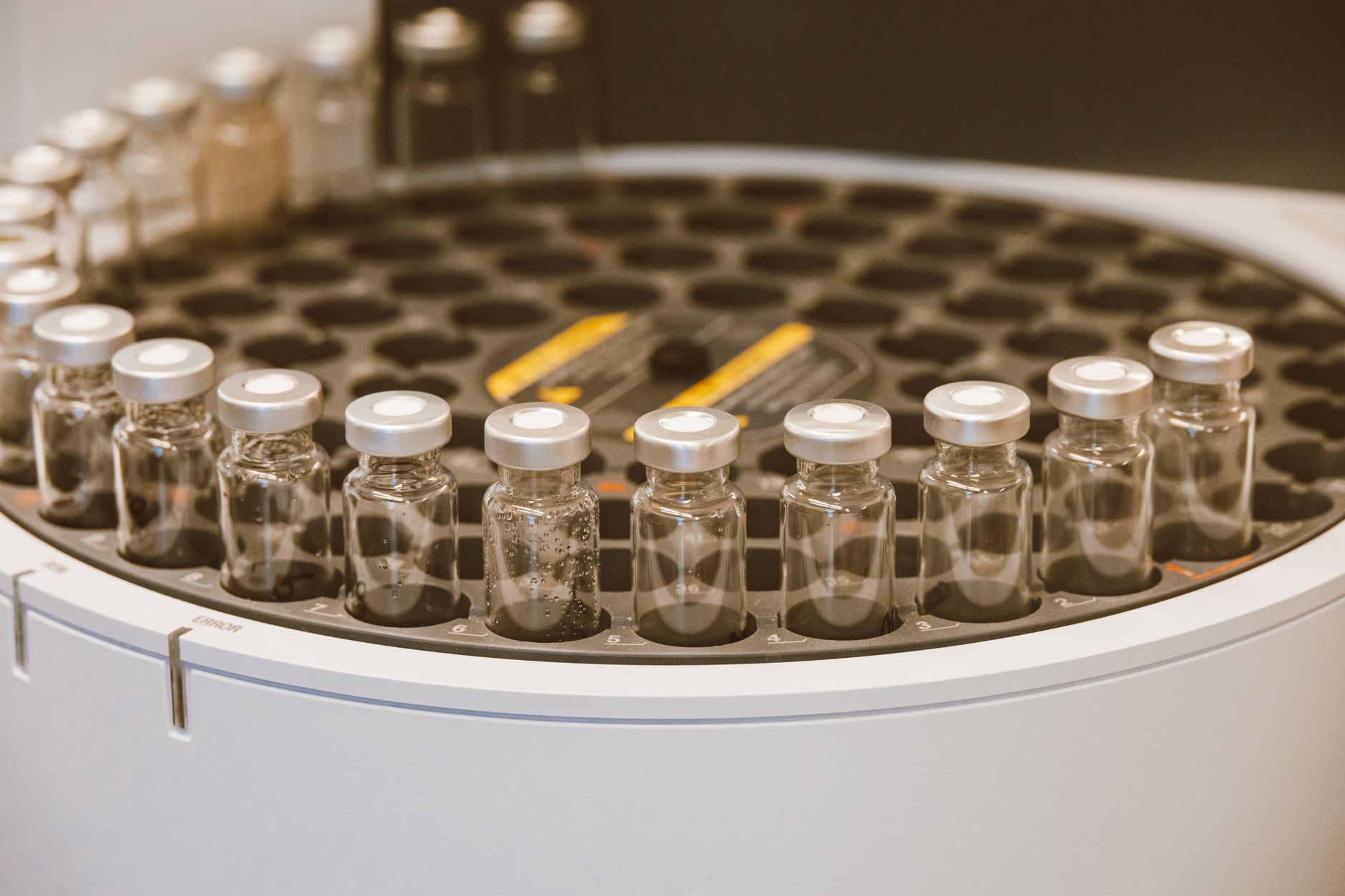
Grey market compounds typically undergo none of these validations. The independent lab test revealing 77% purity likely used HPLC—which identifies only compounds with similar UV absorbance to semaglutide. The remaining 23% is quantified as "unidentified mass," not as a specific contaminant list.
Regulatory and Practical Recommendations
For individuals currently using or considering grey market semaglutide:
- Discontinue use without medical supervision is not advised (GLP-1 agonists require tapering to avoid rebound metabolic dysfunction). Consult a physician immediately.
- Seek pharmaceutical-grade semaglutide through licensed providers only. This may require telemedicine platforms that operate within regulatory frameworks.
- Request third-party testing from any compounding pharmacy before use. Legitimate compounders now offer USP <825> compliant verification.
- Avoid cost arbitrage between grey market and regulated sources. The price difference (often 60-70% cheaper) reflects the absence of quality assurance, not market inefficiency.
The Longevity Paradox
Biohackers pursuing extended healthspan often embrace risk-taking to access cutting-edge interventions before mainstream adoption. However, semaglutide is already mainstream and accessible through legitimate channels. Choosing a 77%-purity variant sacrifices both safety and efficacy—producing neither the longevity benefits nor the weight loss outcomes of the pharmaceutical formulation.
The evidence supporting GLP-1 agonists for weight loss is robust (STEP trials, SUSTAIN trials). The evidence supporting semaglutide specifically for lifespan extension in humans remains preliminary. Compounding this uncertainty with verified impurity is an asymmetric bet that maximizes risk while minimizing the already-speculative longevity upside.
Conclusion
Independent laboratory analysis revealing 77% purity in grey market semaglutide samples represents a critical alert for anyone relying on these compounds for metabolic health or longevity optimization. Subpotent doses produce unpredictable pharmacology, contaminant exposure introduces toxicity risks, and users often respond by over-dosing, amplifying both problems. The longevity benefits claimed for semaglutide depend entirely on receiving the actual pharmaceutical compound in verified doses. Grey market alternatives fail this fundamental requirement.
Medical Disclaimer: This article is for informational purposes only and does not constitute medical advice. GLP-1 receptor agonists carry significant health risks and require medical supervision. Do not start, stop, or modify semaglutide use without consulting a licensed healthcare provider. The analysis presented reflects current scientific literature but does not replace individualized clinical assessment.