
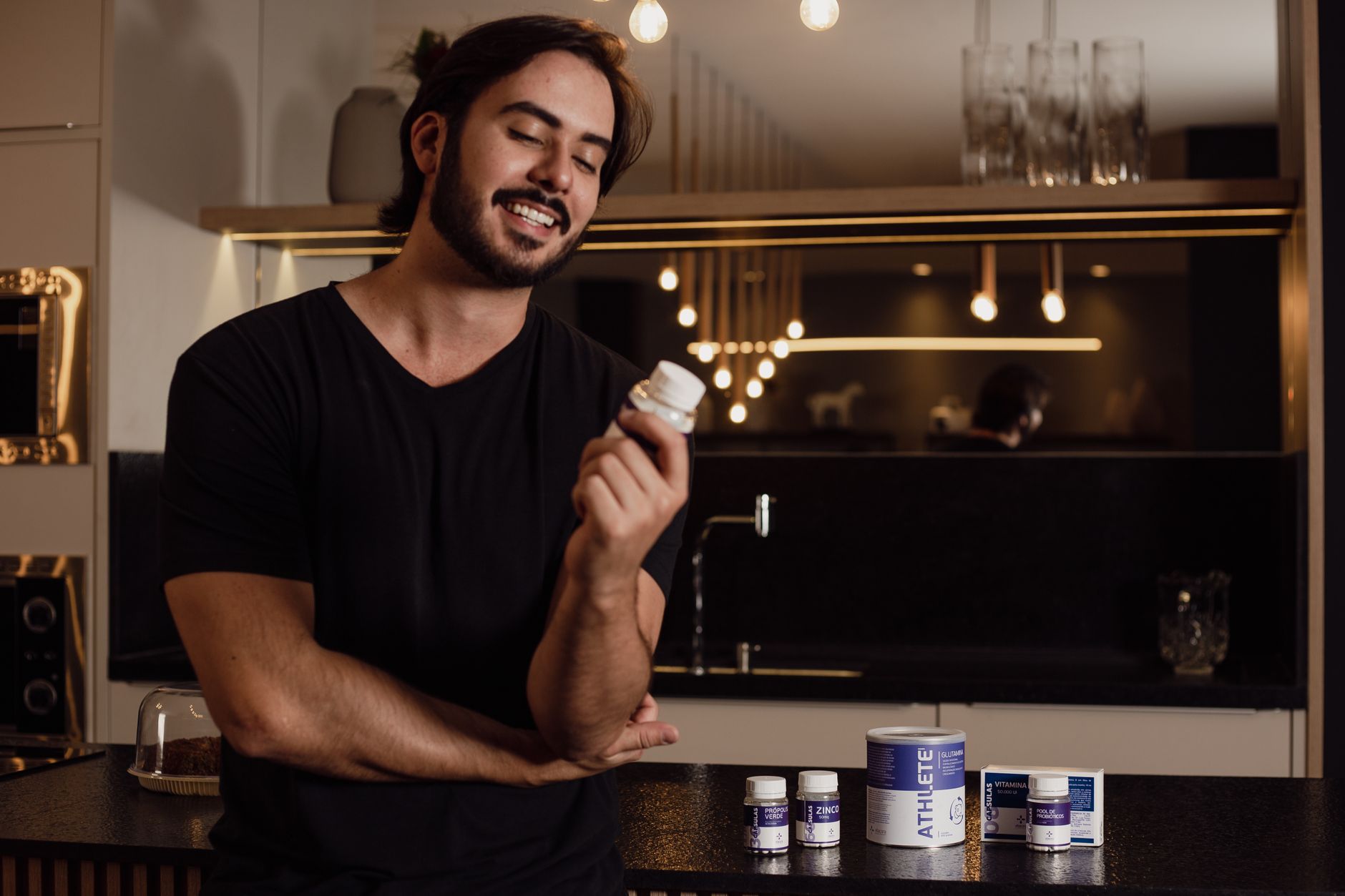
What Anti-Aging Supplements Don't Do
Before we discuss what works, let's establish what doesn't. No supplement reverses aging. No single compound extends human lifespan in ways that randomized controlled trials have demonstrated across age groups. The anti-aging supplement market trades on a fundamental asymmetry: the aging process takes decades to measure, but supplement companies need sales data in months.
Marketing-driven stacks often contain 12+ ingredients, each included at sub-therapeutic doses to keep price points down. Curcumin at 150 mg per serving when studies use 500–1000 mg. NMN at label doses that don't reach systemic concentrations seen in rodent lifespan studies. Resveratrol at quantities that fail to activate sirtuins in human tissue. This is supplement theater, not intervention.
What we can measure instead are proxies: inflammatory markers, oxidative stress, mitochondrial function, collagen synthesis, endothelial health, and cellular senescence markers. These aren't aging itself, but they're mechanistic handles that correlate with age-related disease risk. The gap between "improves a biomarker" and "slows aging" is larger than the supplement industry admits—but it's also the only evidence we have.
Creatine Monohydrate: The Unsexy Baseline
Creatine is the only supplement in this stack that isn't marketed as anti-aging, which is precisely why it belongs here. The evidence is boring and therefore credible.
Creatine monohydrate improves phosphocreatine availability in muscle and brain tissue. In aging adults, this has direct mechanical consequences: it preserves muscle protein synthesis rates, maintains mitochondrial ATP production, and supports cognitive processing speed. The Ferlini et al. (2020) study published in Nutrients found that creatine supplementation in adults over 50 resulted in lean mass preservation comparable to resistance training alone—not superior to training, but additive when combined with exercise.
What matters for an anti-aging stack: creatine is one of the few supplements where dose-response is established. Creatine works at 3–5 grams daily. Loading phases (20 g/day split across 4 doses for 5–7 days) are unnecessary for baseline improvement, though they do accelerate tissue saturation to 2–3 weeks rather than 4 weeks.
For a 20-minute protocol, this is non-negotiable. You're already training (or should be—aging slows without mechanical stimulus). Creatine + resistance work preserves the neuromotor system that declines most sharply in sedentary aging. Five grams daily, taken with carbohydrate to improve intestinal absorption and renal clearance. Timing doesn't matter; it's a loading compound.
Dose: 5 g daily, anytime. If combining with other supplements in powder form, this becomes your base.
NMN: The NAD+ Precursor With Partial Evidence
Nicotinamide mononucleotide sits in a strange zone: compelling preclinical work, weak human data, and expensive pricing that hasn't fallen despite ten years of research. This matters because it defines what we can claim.
The mechanism is established in rodent models. Aging depletes NAD+ levels in mitochondria and nucleus. Sirtuins (SIRT1, SIRT3) are NAD+-dependent enzymes that regulate mitochondrial function, DNA repair, and metabolic switching. NMN replenishes NAD+ pools, theoretically restoring sirtuin activity. In mice, NMN improves glucose handling, mitochondrial biogenesis, and endurance performance (Cantó & Auwerx, 2012, Cell Metabolism). In senescent human cell lines, NMN restores NAD+-dependent protein deacetylation (Yoshino et al., 2018, Science).
The human data is thinner. Lowe et al. (2022), published in Science, gave 12 sedentary adults 1000 mg NMN daily for 6 weeks. Muscle insulin sensitivity improved by 13% versus placebo. That's measurable. That's also the published benchmark—one small RCT in a specific population (sedentary, insulin-resistant). We don't have data on whether NMN prevents aging in healthy, trained individuals. We don't have lifespan data. We have a single paper showing one biomarker shift in one population.
Why include it? If you're already investing time in a supplement stack, NMN has a plausible mechanism and hasn't shown harm. The cost is the real barrier—$50–80 per month for 1000 mg daily—not safety. For active individuals, the insulin sensitivity finding is less relevant (you should already have good glucose handling). For sedentary people adding this stack to a new exercise program, the 13% improvement matters.
Dose: 500–1000 mg daily. The 1000 mg dose is from the Lowe trial. 500 mg is speculative but may still achieve meaningful NAD+ elevation without the cost. Take with food for better absorption (NMN is water-soluble but food improves gastric stability).
Omega-3 Fatty Acids: Dose Matters More Than Brand
Fish oil is where supplement confusion peaks. The market sells omega-3 at dosages that don't match the evidence, then blames omega-3 when high-dose fish oil doesn't lower cardiovascular events in people who already have good triglycerides.
Here's the specificity: omega-3 reduces age-related inflammatory markers and supports endothelial function. Not because of magic. Because eicosapentaenoic acid (EPA) and docosahexaenoic acid (DHA) compete with arachidonic acid in cell membranes, shifting the balance of pro-resolving versus pro-inflammatory eicosanoids. The mechanism is sound. The dosing in practice is often weak.
The REDUCE-IT trial (Bhatt et al., 2019, New England Journal of Medicine) established that high-dose prescription omega-3 (4 g EPA daily) reduced cardiovascular events in people with elevated triglycerides. VITAL (Manson et al., 2022, New England Journal of Medicine) found that omega-3 supplementation didn't prevent major cardiovascular events in the general population—but it did reduce sudden cardiac death by 15% and was more protective in men and in those with low baseline fish consumption.
For anti-aging purposes, the relevant data sits in inflammatory markers. Raatz et al. (2016) meta-analysis in Nutrients found consistent reductions in TNF-α, IL-6, and C-reactive protein with omega-3 intake above 2 g/day EPA+DHA combined. Below 2 g/day, effects are inconsistent. The standard 1 g fish oil capsule contains ~300 mg combined EPA+DHA. Supplement-grade fish oil marketed for general health often assumes you'll take 2–3 capsules daily, never states this clearly, and users take one.
For a minimalist stack, dose omega-3 based on the inflammatory reduction target: 2–3 g combined EPA+DHA daily. This means reading the label, not trusting the serving size. Algae-based omega-3 (for vegans) is bioavailable but more expensive. Triglyceride form (liquid or soft gels from quality brands) has marginally better absorption than ethyl ester form, but the difference is small if you take it with fat-containing meals.
Dose: 2–3 g EPA+DHA daily (total). Take with a meal containing fat. No timing advantage to splitting across meals vs. single dose.
Vitamin D3: The Threshold, Not the Mega-Dose
Vitamin D is the outlier in supplement science: we have epidemiology showing correlation between low D and age-related disease, we have mechanistic data (VDR activation affects immune tolerance, calcium homeostasis, gene expression), and we have intervention trials showing that supplementation works—but only if you correct a deficiency.
The Endocrine Society guidelines (Holick et al., 2011, updated evidence through 2020) define sufficiency as serum 25-hydroxyvitamin D ≥30 ng/mL. Most aging adults in northern climates sit around 20–25 ng/mL in winter. This is a real deficiency in the physiological sense: it impairs VDR-mediated gene expression and increases PTH levels (which accelerates bone loss).
Correcting this deficiency slows bone loss, improves lower-limb strength, and modestly reduces falls in older adults. The VITAL study (again, Manson et al., 2022) showed vitamin D supplementation (2000 IU daily, a modest dose) reduced cancer incidence by 21% and cancer death by 25%, but only in participants with baseline vitamin D below 32 ng/mL. In sufficient individuals, additional vitamin D provided no benefit.
The biohacking tendency is to push to 50–80 ng/mL with mega-doses (5000–10000 IU daily). There's no evidence that this further improves age-related outcomes beyond sufficiency. Observational data suggests risk of hyperparathyroidism and kidney stone formation at sustained levels above 60 ng/mL, though randomized trials at high doses are rare.
For a minimalist anti-aging stack: get baseline serum testing. If you're below 30 ng/mL, supplement to reach 40–50 ng/mL with 2000–4000 IU daily (dosing varies by baseline and body weight). If you're already sufficient, one study doesn't make a case for pushing higher. Retest in 8 weeks, adjust, then retest annually.
Dose: 2000–4000 IU daily based on baseline status and sun exposure. Testing is non-negotiable—guessing wastes money and risks over-supplementation. Take with a fat-containing meal (vitamin D is fat-soluble and requires lipase for absorption).
The 20-Minute Protocol: Integration and Practical Adherence
A minimalist stack works only if you actually take it. Complexity kills compliance. Here's the practical formula:
- Morning: Creatine 5 g mixed into coffee or stirred into water (takes 30 seconds). Omega-3: one dose with breakfast (you already eat breakfast; attach it there).
- Evening or with lunch: Vitamin D3 (2000–4000 IU depending on your number) with a meal containing fat.
- Morning or evening: NMN 500–1000 mg (if you choose to include it; it's the optional item based on budget and interest). Take with food.
This is five minutes to mix creatine, five minutes to manage three capsules/tablets with meals, ten minutes monthly to reorder. Twenty minutes total per month, not per day, to sustain the protocol.
What you don't need: collagen powders (your body breaks them down into amino acids indistinguishable from cheaper protein), resveratrol (insufficient human dosing data and poor bioavailability), NAC (strong evidence only for acetaminophen poisoning, not aging), CoQ10 above 100 mg (your mitochondria produce it; supplemental doses haven't shown lifespan extension in humans), or any compound ending in "-tein" (marketing term).
When This Stack Actually Fails
This protocol assumes baseline conditions: you exercise regularly (resistance training 2–3×/week minimum), you sleep 7+ hours, you don't smoke, and your diet is adequate in protein. A supplement stack is 5–10% of the anti-aging equation. The other 90% is training stimulus, sleep quality, caloric balance, and time outdoors for natural light exposure and sun-synthesized vitamin D.
If you're sedentary, no stack compensates. Creatine + inactivity won't preserve muscle. Omega-3 without movement won't sustain endothelial function. This is the trap: people buy supplements hoping to hack their way around the requirement to move, sleep, and eat properly.
If you're already training and sleeping well, the stack provides measurable gains in biomarkers that predict age-related disease risk. Not reversal. Not fountain-of-youth transformation. Incremental, compounding advantages that matter across decades.
Testing and Refinement
Minimize the stack, maximize the data. Before starting:
- Baseline blood work: 25-hydroxyvitamin D, triglycerides, CRP (high-sensitivity C-reactive protein), fasting glucose, insulin.
- Body composition (DEXA or equivalent) if possible.
- Retest at 12 weeks, then annually.
If biomarkers don't move, the stack isn't working for your physiology. Genetics, methylation capacity, gut absorption, and existing disease state all modulate supplement response. Your data matters more than any general protocol.
This is the opposite of supplement industry messaging, which assumes all bodies work the same way. They don't. The minimalist approach acknowledges that: small stack, close monitoring, adjustment based on results.