
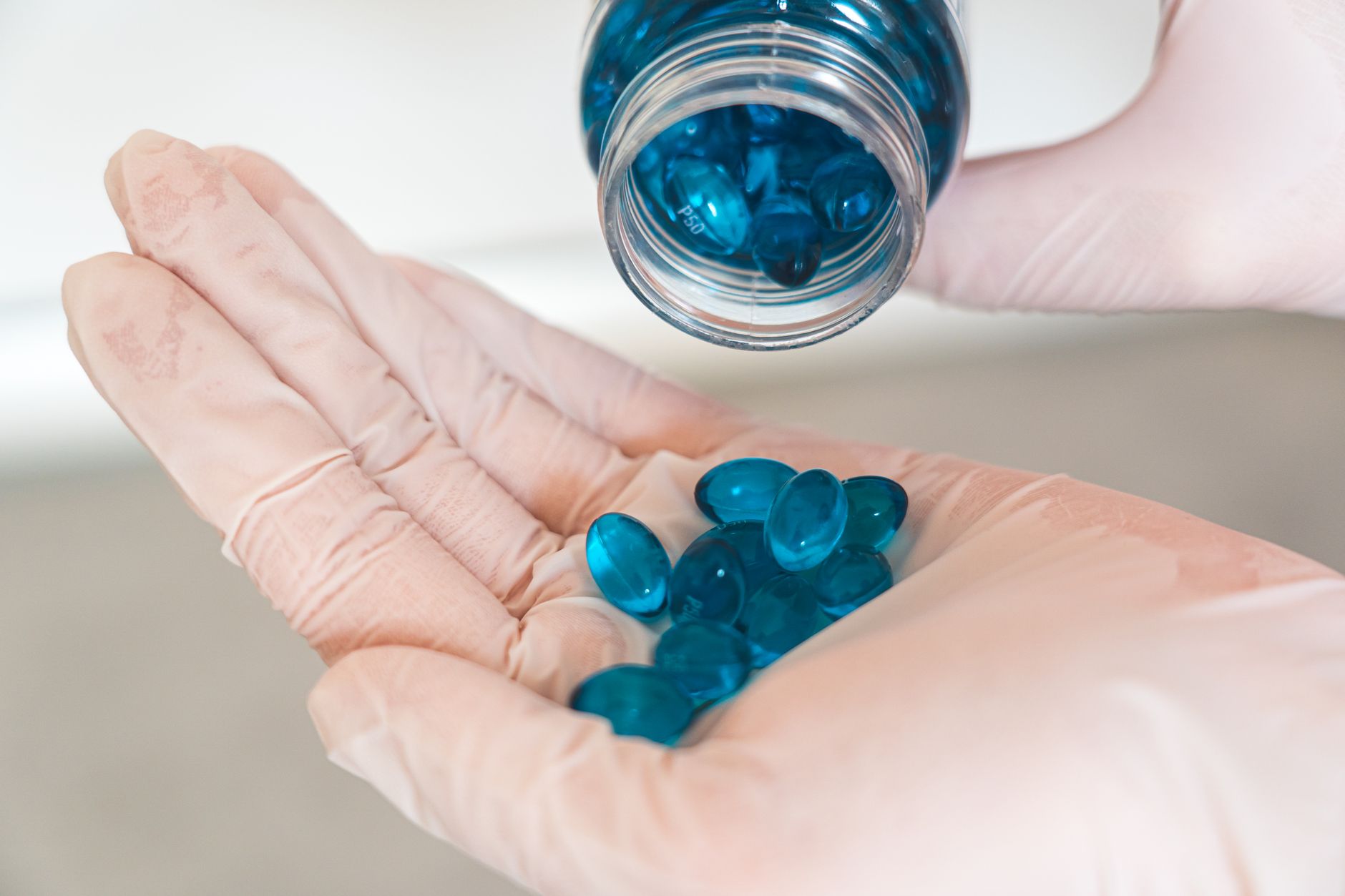
The GLP-1 Gold Rush: Why Supplements Can't Replicate Semaglutide
Glucagon-like peptide-1 (GLP-1) receptor agonists—primarily semaglutide (Ozempic, Wegovy) and tirzepatide (Mounjaro, Zepbound)—have fundamentally shifted weight loss science. Between 2021 and 2024, these medications demonstrated unprecedented metabolic control: average weight loss of 15–22% body weight over 68 weeks in clinical trials (New England Journal of Medicine, 2021; Jastreboff et al.). The mechanism is straightforward: GLP-1 agonists bind directly to GLP-1 receptors in the hypothalamus, pancreas, and gastrointestinal tract, triggering satiety signaling, insulin secretion, and reduced appetite-driven eating.
Seeing this success, supplement manufacturers have flooded the market with "GLP-1 support" products. Most claim to "activate GLP-1 pathways" or "enhance natural GLP-1 production." The critical problem: no oral supplement ingredient has demonstrated the ability to directly bind GLP-1 receptors or replicate semaglutide's mechanism in human trials. What many products actually do is target secondary pathways—like incretin response or GLP-1 secretion—with marginal, inconsistent results.
What These Products Actually Contain (And What the Data Says)
Current GLP-1 "support" supplements typically include:
- Berberine: Often marketed as a "natural GLP-1 booster." Two meta-analyses (Nutr Rev, 2015; PLoS One, 2020) show berberine improves fasting glucose and HbA1c in diabetics, but effect sizes are small (roughly equivalent to a mild sulfonylurea). No studies show it directly activates GLP-1 receptors. Average weight loss in trials: 2–3 lbs over 12 weeks—far below GLP-1 agonist results.
- Chromium picolinate: Widely used for "glucose metabolism support." A Cochrane review (2014) found inconsistent effects on body weight, with most high-quality studies showing no significant advantage over placebo for weight loss in non-diabetics.
- Inositol (myo-inositol and D-chiro-inositol): Emerging evidence shows promise for PCOS and insulin sensitivity. A 2023 meta-analysis (Nutrients) demonstrated modest improvements in insulin resistance markers, but weight loss was modest (1–2 kg over 12 weeks) and unrelated to GLP-1 signaling.
- Bitter melon extract: Traditional use suggests glucose benefits. Limited human trials (J Ethnopharmacol, 2011) show marginal improvements in fasting glucose, with no replication in larger RCTs. Proposed mechanism involves enhancing glucose uptake—not GLP-1 activation.
The Marketing Claims vs. The Published Evidence Gap
A critical distinction: many supplements are marketed as "GLP-1 support" without claiming they ARE GLP-1 agonists. This linguistic sleight allows companies to avoid FDA scrutiny while capitalizing on consumer awareness of semaglutide's efficacy.
The evidence divide is stark:
- Semaglutide (GLP-1 agonist): 22% average weight loss, 68 weeks (NEJM, 2021). RCT with 1,961 participants, double-blind, placebo-controlled.
- Berberine (most-cited supplement "alternative"): 2.3% weight loss over 12 weeks (PLoS One, 2020 meta-analysis of 14 trials, n=1,075). Heterogeneous results; many studies underpowered.
- Chromium + inositol combinations: Approximately 1–1.5 kg weight loss over 12 weeks in insulin-resistant populations (Nutrients, 2021). No evidence in metabolically normal individuals.
This 10-fold difference in effect size reflects a fundamental pharmacological reality: oral supplements cannot mimic the specificity and potency of a receptor agonist that crosses the blood-brain barrier and binds with nanomolar affinity.
Why GLP-1 Receptor Activation Matters (And Why Supplements Miss It)
The GLP-1 receptor is a G-protein-coupled receptor (GPCR) found primarily in the hypothalamus, brainstem, and pancreatic beta cells. Direct activation triggers:
- Hypothalamic signaling that suppresses NPY/AgRP neurons (appetite drivers) and activates POMC neurons (satiety signals)
- Delayed gastric emptying (mechanical satiation)
- Enhanced insulin secretion (postprandial glucose control)
- Possible neuroplasticity changes in reward centers (reduced hedonic eating)
Supplements marketed as "GLP-1 support" typically work via indirect mechanisms: improving insulin sensitivity, enhancing endogenous GLP-1 secretion from L-cells, or reducing inflammation. A 2023 review in Diabetes Care noted that while some compounds (notably berberine and polyphenols) may modestly increase GLP-1 secretion, the magnitude is negligible compared to pharmacological agonism.
Exceptions: Compounds With Partial, Measurable Data
A handful of ingredients have shown GLP-1-adjacent mechanisms in humans:
- Glucomannan (soluble fiber): A 2015 meta-analysis (Nutrition Reviews) found viscous fiber increased GLP-1 and PYY secretion and reduced subsequent hunger. Average weight loss: 1.5 kg over 12 weeks. Mechanism: mechanical—fermentation and L-cell stimulation, not receptor agonism. Effect is real but modest.
- Oolong tea polyphenols: A 2016 study (Obesity) suggested polyphenols may enhance GLP-1 secretion post-prandially, though blinded trials remain limited. One 12-week RCT (n=102) showed 0.9 kg additional weight loss vs. placebo—statistically significant but clinically marginal.
- Semaglutide precursor compounds (in development): Oral GLP-1 agonists (e.g., rybelsus—oral semaglutide) exist but are drugs, not supplements. No supplement has replicated their bioavailability.
The Red Flags in GLP-1 Supplement Marketing
Consumers should scrutinize:
- "Activates GLP-1 pathways" without specifying mechanism: Vague language that may refer to indirect effects (like improved glucose handling) rather than receptor binding.
- Before-and-after photos without controlled data: Meaningful weight loss often reflects caloric restriction or concurrent exercise, not supplement efficacy.
- Testimonials citing semaglutide-level results (15–20% weight loss): Biologically implausible from supplements alone; likely reflects lifestyle changes or undisclosed concurrent medication use.
- "Clinical trials prove" claims without peer-reviewed citations: Many brands cite unpublished or in-house studies unvetted by external review.
The Legitimate Role for GLP-1 Support Supplements
This isn't to say these supplements are worthless. In specific contexts, they may offer modest benefits:
- For insulin-resistant or prediabetic individuals: Berberine, inositol, and chromium show modest benefits for glucose control (1–2% HbA1c reduction) (Diabetes Res Clin Pract, 2022). This is clinically meaningful but not weight-loss significant.
- As adjuncts to semaglutide: Some individuals use fiber, berberine, or inositol alongside GLP-1 medication to enhance satiety or manage side effects (nausea, constipation). Limited data supports this, but the rationale is physiologically sound.
- For metabolic priming in weight loss resistance: Individuals with severe insulin resistance may experience marginal additional weight loss from berberine or polyphenol supplementation, though benefit sizes are typically 1–3 lbs over 12 weeks.
The Bottom Line: Expectations vs. Reality
GLP-1 supplements occupy a marketing sweet spot: they reference a drug class with proven results while avoiding regulatory classification as drugs. For consumers, this creates dangerous expectations misalignment. A person seeking 20% weight loss from a supplement will be disappointed; the evidence supports 1–3% at best when combined with caloric restriction.
If weight loss is the goal, the hierarchy is clear: GLP-1 prescription medications (with medical supervision) provide the largest effect. Lifestyle interventions (caloric deficit, resistance training) provide the second-largest effect. Supplements provide marginal, additive benefits (if any) in specific metabolic contexts.
The gimmick wave won't recede because supplement marketing operates in a regulatory gray zone. However, evidence-informed consumers should view GLP-1 "support" supplements as legitimate tools for *metabolic optimization*—not as alternatives to prescription GLP-1 or as stand-alone weight loss solutions.