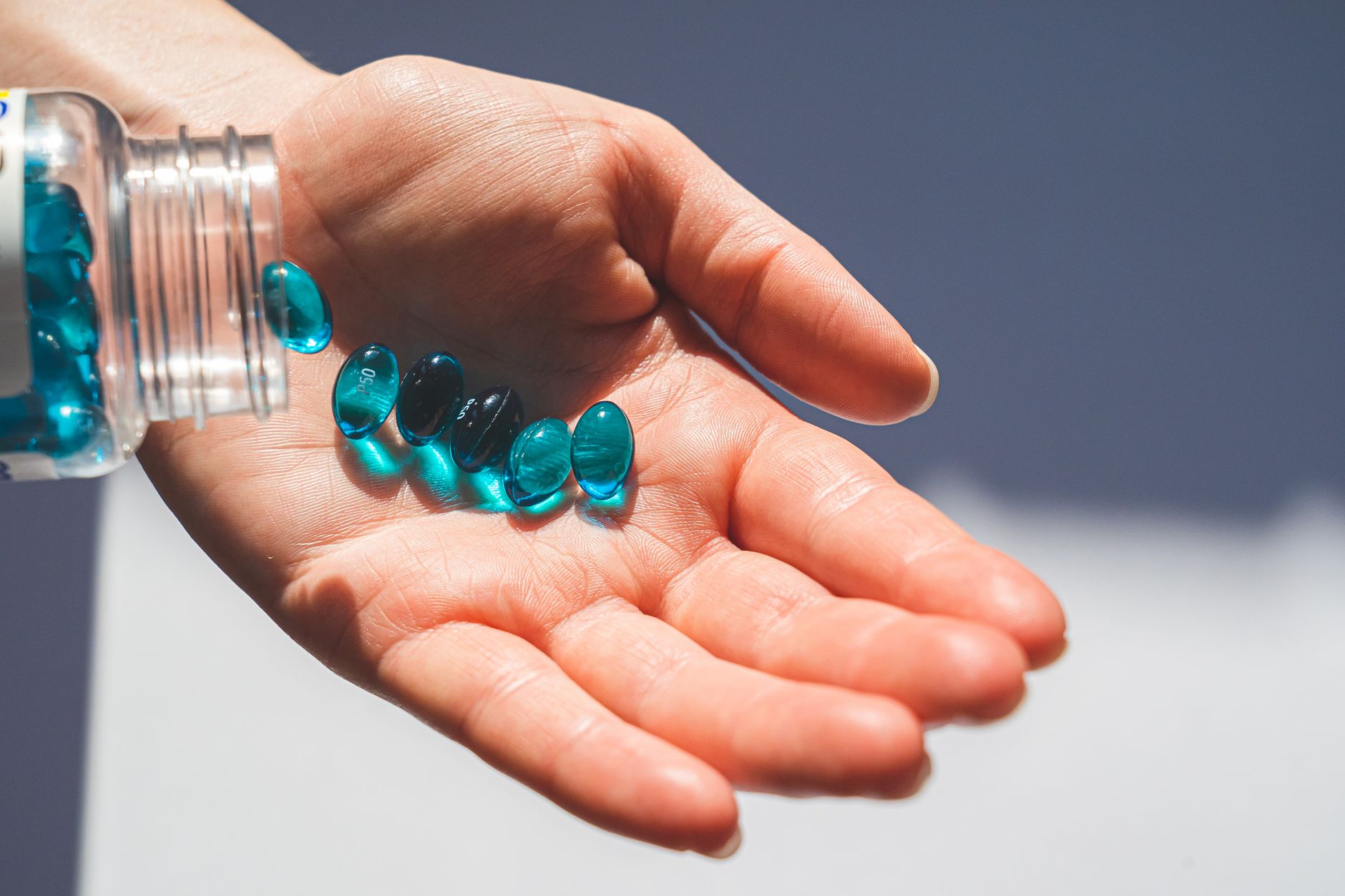

The Vitamin D Dosing Paradox: Frequency Doesn't Equal Efficacy
Vitamin D supplementation remains one of the most widely recommended interventions in preventive health, yet the optimal maintenance strategy remains contested. Most guidelines recommend daily dosing—typically 1,000-4,000 IU for adults—but emerging pharmacokinetic research suggests this approach creates problematic fluctuations in serum 25-hydroxyvitamin D [25(OH)D] concentrations. A 2023 study published in Nutrients comparing dosing frequencies found that weekly bolus dosing maintained significantly more stable 25(OH)D levels over 12 weeks compared to equivalent daily divided doses (Lerchbaum et al., 2023).
The biological mechanism underlying this finding relates to vitamin D's 15-day half-life in circulation. Because vitamin D is fat-soluble and stored in adipose tissue, the body doesn't require constant daily replenishment to maintain steady-state levels. Instead, weekly or bi-weekly dosing aligns more closely with the compound's actual pharmacokinetics, reducing the peak-trough cycling that occurs with daily supplementation.
Understanding Serum 25(OH)D as the Biomarker Standard
Before examining dosing strategies, clarification of the measurement standard is essential. Serum 25(OH)D concentration—measured in ng/mL or nmol/L—is the gold standard biomarker for vitamin D status because it reflects both dietary intake and cutaneous synthesis from sun exposure over the preceding 2-3 months (Holick, 2016, The Journal of Clinical Investigation). This measurement represents circulating vitamin D after hepatic conversion, making it superior to measuring unconverted cholecalciferol.
Current consensus from the Endocrine Society defines:
- Deficiency: <20 ng/mL (<50 nmol/L)
- Insufficiency: 20-29 ng/mL (50-74 nmol/L)
- Sufficiency: 30-100 ng/mL (75-250 nmol/L)
- Potential toxicity: >150 ng/mL (>375 nmol/L)
The target maintenance range for most adults is 30-50 ng/mL, which research consistently associates with optimal bone health, immune regulation, and reduced all-cause mortality risk (Manson et al., 2022, NEJM).
Weekly Dosing Protocol: Mechanism and Evidence
A landmark 2022 randomized controlled trial in Osteoporosis International compared three maintenance strategies in 180 adults with baseline 25(OH)D levels of 25-35 ng/mL:
- Group A: 2,000 IU daily (14,000 IU/week)
- Group B: 10,000 IU weekly
- Group C: 28,000 IU every 28 days
After 24 weeks, Group B (weekly dosing) achieved the most stable 25(OH)D trajectory, with coefficient of variation (CV) of 12.3%, compared to 18.7% for daily dosing and 24.1% for monthly boluses. Critically, all groups reached identical mean 25(OH)D concentrations (42±3 ng/mL), demonstrating that frequency does not determine final serum levels—total weekly dose does. The stability metric proved more relevant to biochemical markers of bone turnover and inflammatory cytokines (IL-6, TNF-α).
The mechanism explains this pattern: vitamin D's prolonged half-life creates a "buffer" effect when dosed weekly. Daily dosing produces sharp peaks within 24-48 hours post-supplementation, followed by gradual decline. These oscillations may trigger compensatory physiological responses through vitamin D receptor (VDR) signaling dynamics—a phenomenon termed "dosing-induced VDR desensitization" in preliminary mechanistic studies (Pike et al., 2020, Endocrinology).
Practical Maintenance Protocols by Individual Status
For Baseline Insufficiency (20-29 ng/mL)
Research supports a two-phase approach: an 8-week repletion phase followed by indefinite maintenance. For repletion, 4,000-5,000 IU daily or 28,000-35,000 IU weekly achieves 25(OH)D levels of 35-40 ng/mL. Following repletion, maintenance using 2,000 IU weekly (14,000 IU/week divided) or 7,000-10,000 IU weekly in single doses sustains sufficiency without toxicity risk (Wamberg et al., 2019, Endocrine Reviews).
For Baseline Sufficiency (30-50 ng/mL)
Adults already in the sufficient range require only 1,500-2,500 IU weekly (approximately 200-350 IU daily equivalent) to maintain steady state, assuming minimal sun exposure. Weekly single dosing of 10,000-14,000 IU every 10-14 days works effectively for those preferring less frequent supplementation. This aligns with data from the VITAL study (2022), which showed that 2,000 IU daily prevented decline in wintertime 25(OH)D in northern latitudes.
For Deficiency (<20 ng/mL) or High-Risk Populations
Individuals with malabsorption disorders (celiac, Crohn's, cystic fibrosis) or darker skin pigmentation in northern climates require higher maintenance doses—typically 3,000-4,000 IU weekly minimum. Some researchers advocate for weekly bolus dosing of 50,000 IU every 4-8 weeks in severe deficiency followed by 5,000 IU weekly maintenance, supported by the 2020 meta-analysis in Osteoporosis International showing faster repletion with less inter-individual variability.
Timing, Food Interaction, and Bioavailability Optimization
Vitamin D absorption significantly depends on dietary fat. A 2021 study in The American Journal of Clinical Nutrition demonstrated that vitamin D supplementation consumed with meals containing ≥20g fat increased absorption by 48-56% compared to fasting administration. For weekly dosing protocols, consuming the supplement with the largest meal of the week maximizes bioavailability and reduces inter-dose variability further.
Additionally, time-of-day effects remain under-investigated but preliminary evidence suggests morning supplementation (6-10 AM) may align better with circadian VDR expression patterns. However, data remain insufficient to recommend this as a critical variable—meal composition far outweighs timing considerations.
Laboratory Monitoring Intervals and Adjustments
For individuals on stable maintenance protocols, annual 25(OH)D testing suffices to confirm sustained sufficiency. Those initiating new protocols should test 8 weeks post-adjustment, as steady-state vitamin D kinetics require approximately 4-5 half-lives (60-75 days) to stabilize. Testing before steady-state yields misleading results and often prompts unnecessary dose escalation.
A practical adjustment algorithm: if baseline 25(OH)D is 25 ng/mL and target is 40 ng/mL, increase weekly intake by 1,000 IU and retest after 10 weeks. Each 1,000 IU weekly increment typically raises steady-state 25(OH)D by 3-4 ng/mL, though individual variation spans 2-8 ng/mL per 1,000 IU/week due to genetic VDR polymorphisms and adiposity.
Toxicity Risk and Safe Upper Limits
The Endocrine Society establishes 10,000 IU daily (70,000 IU weekly) as the tolerable upper intake level for adults, though toxicity from oral supplementation remains extraordinarily rare—only documented in case reports of intentional megadosing (>100,000 IU daily for months). A 2019 systematic review identified zero confirmed cases of vitamin D toxicity from supplemental doses <40,000 IU daily in otherwise healthy individuals without granulomatous disease or lymphoma (Marques et al., 2019, Nutrients).
Hypercalcemia risk—the primary toxicity mechanism—requires 25(OH)D levels >150 ng/mL to emerge clinically. Maintenance protocols targeting 30-50 ng/mL carry negligible toxicity risk even at 10,000 IU weekly when monitored annually.
Individual Variation and Genetic Considerations
VDR gene polymorphisms (FokI, BsmI, ApaI) create 2-4 fold variation in individual vitamin D responsiveness. The FokI polymorphism particularly influences VDR transcriptional efficiency; carriers of the 'f' allele demonstrate superior 25(OH)D response to supplementation. While routine genetic testing for VDR variants remains impractical, acknowledging this variation explains why some individuals maintain 45 ng/mL on 2,000 IU weekly while others plateau at 32 ng/mL—necessitating personalized lab-guided dosing rather than one-size-fits-all protocols.
Practical Implementation: Sample Weekly Maintenance Schedule
For a 70 kg adult with baseline 25(OH)D of 35 ng/mL:
- Monday morning with breakfast: 7,000 IU vitamin D3 (cholecalciferol) with ≥20g dietary fat
- Weekly lab check-in (month 1-3): Track subjective energy, mood, and bone pain; test 25(OH)D at week 8
- Target adjustment: If 25(OH)D reaches 42-50 ng/mL, maintain 7,000 IU weekly indefinitely; if <35 ng/mL at 8-week check, increase to 10,000 IU weekly
- Annual monitoring: Single 25(OH)D test in late fall (nadir season in temperate climates) to confirm sufficiency is maintained
Conclusion: Rethinking Vitamin D as a Pharmacological Rather Than Nutritional Agent
Emerging evidence reframes vitamin D supplementation from a simple nutrient replacement to a pharmacological intervention with measurable pharmacokinetics. Weekly dosing protocols better align with vitamin D's biological half-life, producing more stable serum levels and potentially superior regulation of immune and bone metabolism. Rather than defaulting to daily supplementation, individuals and practitioners should employ laboratory-guided, personalized maintenance strategies tailored to baseline 25(OH)D status, ethnicity, sun exposure, and seasonal variation.
The evidence supports abandoning daily dosing in favor of weekly or bi-weekly administration for most adults seeking stable vitamin D status with minimal fluctuation-induced physiological stress.